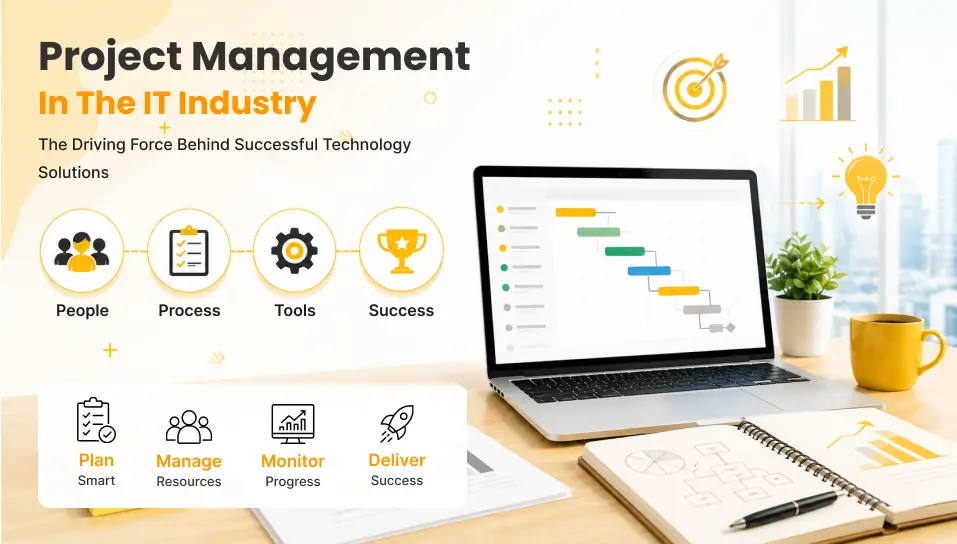
IT industry is one of the high growth industry in the world. All organizations depend on technology to handle operations, improve customer experience, increase productivity, and survive in the competitive marketplace.
However, developing a software solution is not simple. A successful IT project involves multiple stakeholders and has complex technical requirements, changing business needs, tight deadlines, and budget constraints. Without having proper planning, projects can easily exceed budgets, miss deadlines, and fail to meet customer satisfaction.
That is why project management is important for handling a project. The project management life cycle provides a structured approach to deliver a successful product. It helps to manage resources, and reduce risks, and manage quality standards.
This article explores project management in the IT industry, its lifecycle, methodologies, benefits, and future of project management.
Understanding IT Project Management
IT Project Management is the process of planning, organizing, executing, monitoring, and closing technology-related projects. It is about aligning people, processes and technology to achieve certain business objectives. In this regard, IT projects do not act as a traditional project. Rapidly changing requirements, evolving technologies and multiple stakeholder expectations make effective project management essential.
The importance of Project Management in IT
Technology projects require multiple teams, technical complexities, and strict deadlines. Without having effective project management, organizations can experience delays, budget overruns, quality problems, and dissatisfied stakeholders.
Project management provides several benefits:
- Clear project objectives and deliverables
- Improved communication among stakeholders
- Better resource allocation and utilization
- Reduced project risks
- Enhanced quality control
- Greater customer satisfaction
- Higher project success rates
Project managers set clear processes and responsibilities that keep the project on track and aligned throughout the life cycle of the project.
The IT Project Management Lifecycle
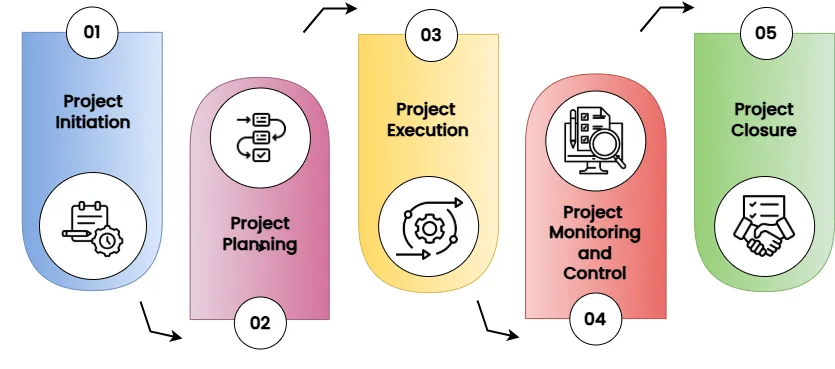
Most IT projects follow a structured lifecycle consisting of five major phases.
Agile Project Management :
Traditional project management techniques face challenges in adapting to the software development requirements. Therefore, a lot of IT companies have adopted Agile methodologies.
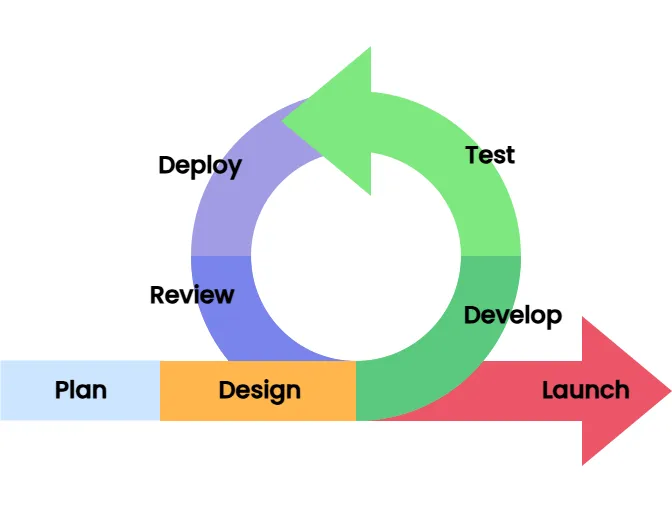
Agile is about doing things in little chunks called sprints. Throughout the development process, we can get feedback and add changes according to modified business requirements.
Benefits of Agile Project Management
Faster Product Launch:
Organizations can get and see features more quickly rather than waiting for the entire project to be done.
Increased customer satisfaction:
Feedback from customers can be received during the development stage, to ensure the final software product meets their business needs.
Increased Flexibility:
Teams can easily adapt to changing business requirements and add new features without disrupting the entire project.
Enhanced Product Quality:
Continuous testing and reviewing helps identify and resolve issues early.
The Future of Project Management in the IT industry
The future of project management in the IT industry is evolving with new technologies, automation, and changing business needs. Project managers can get support from Artificial Intelligence for automating their day-to-day tasks like risk analysis, resource allocation, and reporting. Not only that, but also strategic planning and stakeholder engagement.
Automation helps to make all the tasks easier, which will increase the productivity and efficiency of the project managers. At the same time, organizations also embrace hybrid project management methodologies combining Agile and traditional practices to meet project needs.
With access to real-time data, project managers will be able to make better decisions, avoid potential issues, manage resources and reduce project risks. Most organizations go with remote and global teams. Therefore, project managers needs stronger leadership, communication, and collaboration skills. Cloud-based technologies will support in managing teams effectively.
Sustainability will become an important part of any IT project as organizations focus on minimizing the environmental impact of their project. Cybersecurity is also a major field to handle throughout the project lifecycle. In addition, emerging technologies such as Virtual Reality (VR) and Augmented Reality (AR) will improve team collaboration, provide better training experiences, and increase stakeholder engagement.
Future project managers should be able to adapt to new technology, analyze data, and develop leadership skills to handle IT projects successfully.